

Taxes
- Thread starter Tidewater
- Start date
You are using an out of date browser. It may not display this or other websites correctly.
You should upgrade or use an alternative browser.
You should upgrade or use an alternative browser.
I was chatting with someone at work today and I said something that might lead to a good idea.
Total the tax dollars you sent to federal, state and local. Then allow the taxpayer to shift $1,000 of the total from any once to any other level of government. As long as the total comes out to what it was to begin with.
Me personally, I would shift the entire $1,000 from federal to my city (cities in Virginia are (almost) entirely independent of the counties where they lay, so many city is my county).
My city spends like a tightfisted bunch and I would like to pay cops, teachers, garbage collectors, & firefighters more.
The federal government can stand to lose some weight.
Thoughts?
Our tax structure is upside down. The individual's tax burden to the federal government should be comparatively little (IIRC, 6% per the economic analysis I read a few years back, if enumerated powers mean anything) compared to that of the states/local governments. And with the way the feds squander money, they don't deserve any more. Why keep rewarding bad behavior? Washington will spend every dollar and then some. And still ask for more. Anything that shifts my tax money locally is fine with me.
States generally aren't so stupid, unless it's "federal" money they are spending. If Boston wants to waste billions on the Big Dig or if Alaska wants to build bridges to nowhere or if California wants to give every citizen and non citizen a pony, more power to them as long as it's their own money.

I've always favored a flat rate tax but I know it will never happen because it's too logical. Another tax I'm in favor of is a $2.00 gallon gas tax plus a tax on vehicles based on the size engine it has. I.E., if a vehicle has larger than a 3.5 engine, the one time sales tax would be $10,000.00. Between 1.8 and 3.5 engines, a $5,000.00 one time sales tax, and under 1.8 engines, no tax. This would be a win win win situation. It would provide the government with a lot more money to waste, get most of the huge pickups and SUV's off the road, and help clean up the environment.

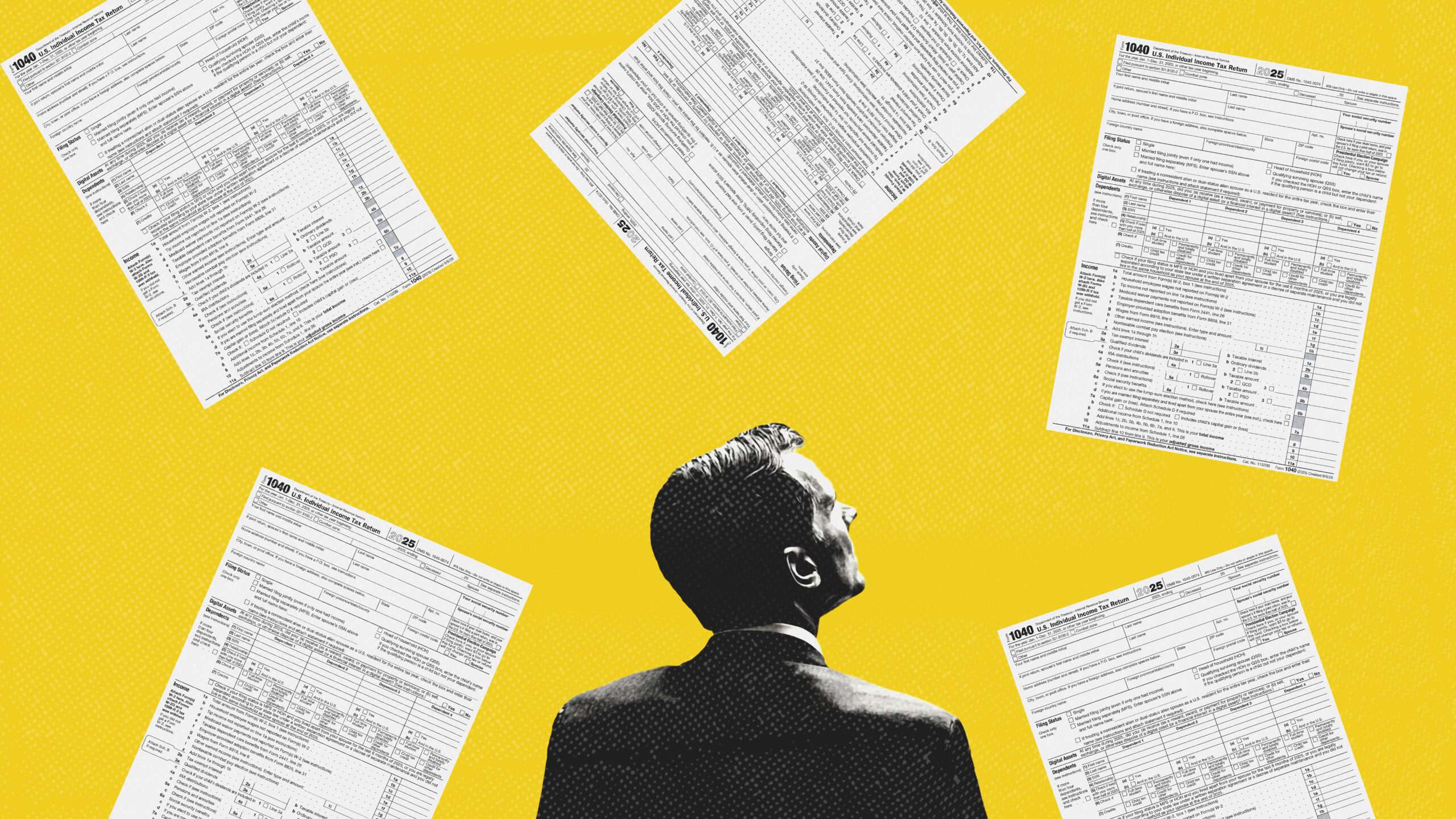
'The rich don't pay their fair share' and 4 other tax myths that won't die
The United States has the most progressive income-tax system in the developed world.
 reason.com
Every April, Americans spend more than 7 billion hours filing taxes and roughly the same amount of time arguing over them, almost entirely on the basis of several common myths. Here are the five most consequential.
Great article I came across earlier. It took a minute to find an appropriate thread, but I finally did.
 Holy resurrected threads, Batman!
This should be required reading for high school students. I would hazard to guess that less than 25% of the population knows these facts.'The rich don't pay their fair share' and 4 other tax myths that won't die
The United States has the most progressive income-tax system in the developed world.
Great article I came across earlier. It took a minute to find an appropriate thread, but I finally did.

Feeling generous, I see. I would have estimated maybe 10%.This should be required reading for high school students. I would hazard to guess that less than 25% of the population knows these facts.

I have posted similar analyses in the past on this board, using IRS statistics.
I'm not sure how one questions arithmetic, but apparently that's been a thing for a while now. If the numbers don't work for you, attack the person putting them forward.
Whatever the problem is, blame it on someone who isn't like you, such as you perceive yourself. Richer, poorer, whiter, more color in his skin, different plumbing, his parents had more (or less) than yours did....whatever. So long as there is one, the perceived difference doesn't matter.
Simon and Garfunkel got it right almost 60 years ago -- A man hears what he wants to hear and disregards the rest.
Yes, I have my cynical hat on tonight.
I'm not sure how one questions arithmetic, but apparently that's been a thing for a while now. If the numbers don't work for you, attack the person putting them forward.
Whatever the problem is, blame it on someone who isn't like you, such as you perceive yourself. Richer, poorer, whiter, more color in his skin, different plumbing, his parents had more (or less) than yours did....whatever. So long as there is one, the perceived difference doesn't matter.
Simon and Garfunkel got it right almost 60 years ago -- A man hears what he wants to hear and disregards the rest.
Yes, I have my cynical hat on tonight.



I learned as a kid that you can't spend more money than you make. Why do we keep electing people who could not figure that out when they were kids?

Because it's not their money, and even if it were their money most people live pay check to pay check and often spend more in a month than they take in. They just put it on credit cards they will never pay off. Watch an episode of Financial Audit on Youtube. The host is a guy named Caleb Hammer. I call him the mean Dave Ramsey. The absolute train wrecks he has on the show are good examples of how most people live their lives.I learned as a kid that you can't spend more money than you make. Why do we keep electing people who could not figure that out when they were kids?
The other side is the people in office want to be elected or reelected so they do whatever they think they need to to get power. The other problem is people say they want to cut spending but then when you start asking them what to cut they don't actually want to cut anything that they like.


The Secret IRS Files: Trove of Never-Before-Seen Records Reveal How the Wealthiest Avoid Income Tax
ProPublica has obtained a vast cache of IRS information showing how billionaires like Jeff Bezos, Elon Musk and Warren Buffett pay little in income tax compared to their massive wealth — sometimes, even nothing.
 www.propublica.org


I think a little context to the entire picture is necessary to see that Bezo isn't free loading from "paying his fair share" in the sense that the average uninformed citizen would believe.
Bezo, personally, probably doesn't pay much, if any, personal income tax because he only takes an $80K salary from Amazon. I think either in 2024 or 2023 he paid like $1.3 million in personal income tax because he cashed out Amazon stock. Any year he does that, he pays capital gains taxes. Also, Amazon is a C-Corporation under federal tax law, so Amazon's profits are taxed on a corporate tax rate, which is MUCH MUCH higher than personal tax rates.
Though his personal income taxes are low, his company literally pays billions in corporate income taxes to the federal government each year. Granted, I know the % of total income still makes a lot of people unhappy, but it doesn't change the fact that his company pays (literally) BILLIONS in income taxes each year. Also, one of the ways Amazon lowers their taxable income is they issue company stock to employees at a discounted rate and in some cases, bonuses are paid via stock options. This is an expense to Amazon, which lowers taxable income, but it is also helping their employees increase their personal wealth in a way that regular wages would never do. I do a couple's tax return where the husband works for Amazon. As part of his compensation package, he is issued "X" amount of stock per pay period at a discounted rate. He's done this for the 10 years he's been there. With this "perk", he has vastly increased his family's wealth via stock in Amazon. When he does decide to cash it out, he is going to be living very comfortably.
There's no doubt we can debate could/should Bezo/Amazon "pay more" in taxes. However, when it is thrown out there, without any context, that he doesn't or didn't pay any income taxes, it paints a picture to the average citizen of something that isn't true. The average citizen reader reads that and has no clue that C Corps pay higher tax rates than individuals and Bezo is keeping a ton of income in the company that is being taxed at a higher rate than it would if he would pay it out to himself.


For me this always boils down to honesty in how things are phrased.View attachment 56929
View attachment 56930
I think a little context to the entire picture is necessary to see that Bezo isn't free loading from "paying his fair share" in the sense that the average uninformed citizen would believe.
Bezo, personally, probably doesn't pay much, if any, personal income tax because he only takes an $80K salary from Amazon. I think either in 2024 or 2023 he paid like $1.3 million in personal income tax because he cashed out Amazon stock. Any year he does that, he pays capital gains taxes. Also, Amazon is a C-Corporation under federal tax law, so Amazon's profits are taxed on a corporate tax rate, which is MUCH MUCH higher than personal tax rates.
Though his personal income taxes are low, his company literally pays billions in corporate income taxes to the federal government each year. Granted, I know the % of total income still makes a lot of people unhappy, but it doesn't change the fact that his company pays (literally) BILLIONS in income taxes each year. Also, one of the ways Amazon lowers their taxable income is they issue company stock to employees at a discounted rate and in some cases, bonuses are paid via stock options. This is an expense to Amazon, which lowers taxable income, but it is also helping their employees increase their personal wealth in a way that regular wages would never do. I do a couple's tax return where the husband works for Amazon. As part of his compensation package, he is issued "X" amount of stock per pay period at a discounted rate. He's done this for the 10 years he's been there. With this "perk", he has vastly increased his family's wealth via stock in Amazon. When he does decide to cash it out, he is going to be living very comfortably.
There's no doubt we can debate could/should Bezo/Amazon "pay more" in taxes. However, when it is thrown out there, without any context, that he doesn't or didn't pay any income taxes, it paints a picture to the average citizen of something that isn't true. The average citizen reader reads that and has no clue that C Corps pay higher tax rates than individuals and Bezo is keeping a ton of income in the company that is being taxed at a higher rate than it would if he would pay it out to himself.
The personal tax rate on someone earning $1 billion is X%.
The personal tax rate on someone earning $42k/year is going to be substantially less than X%.
Yet we hear all the time that Mr. Rich Guy earns $Y amount but pays a lower total tax rate than his secretary. How is this possible? Because the tax rates are set high by Congress (for political purposes: "soak the rich"), then Congress proceeds to adopt thousands of exemptions, reductions, tax breaks, etc. etc. By the time you get done with it all. Mr. Rich Guy has paid a team of lawyers and accountants to move his wealth or income from the high tax rate areas into lower tax exemptions/breaks, etc. and save millions by the moves. Ms Secretary cannot afford the lawyers and accountants and she just pays the normal income tax rate of her income. That rate could easily be a higher total rate than that paid by Mr. Rich Guy. It makes great newspaper copy (and great stump speech material), but it is dishonest. If Congress got rid of all the exemptions/reductions/breaks, then Mr. Rich Guy would pay through the nose, but Congress loves the exemptions/reductions/breaks. They help Congressional re-election campaign funding ("Hey, Mr. Congressmen, put this new exemption into the tax code and I'll write a check for $1M to you 'Re-elect Congressman Jones' PAC.")
Another bunch of hoo hah article where they are confusing (on purpose) asset appreciation with "income". It never has been and shouldn't ever. My house has doubled in value since I bought it ten years ago. Should I pay income taxes on that? According to these people I should. The problem is my tax bill would be far more than I actually have so I would have to sell my house just to pay the "increase in value" taxes. Not to mention I already pay an insane amount in property taxes that have doubled along with the increase in value of my house.The Secret IRS Files: Trove of Never-Before-Seen Records Reveal How the Wealthiest Avoid Income Tax
ProPublica has obtained a vast cache of IRS information showing how billionaires like Jeff Bezos, Elon Musk and Warren Buffett pay little in income tax compared to their massive wealth — sometimes, even nothing.
Asset valuation increases should never be treated as Federal Income Taxable until you actually sell the assets and get the cash. Articles that compare income taxes with "wealth" taxes do nothing more than confuse ordinary citizens and tick people off. If you want to tax asset appreciation then go after the borrowing that some of the the billionaires live off. I think you can make a logical case that living off borrowing, when you are wealthy should not be allowed to be untaxed. Taxing all asset appreciation would be a horrible idea,
Because Congress is made up of people who are also rich and who also want to lower their taxable income as low as possible. Though they stand behind a podium and blast the rich, when their accountants and lawyers do their tax returns, they are taking the same credits, exemptions and deductions as the ones they're blasting. Funny how that works, isn't it? LOL!For me this always boils down to honesty in how things are phrased.
The personal tax rate on someone earning $1 billion is X%.
The personal tax rate on someone earning $42k/year is going to be substantially less trhan X%.
Yet we hear all the time that Mr. Rich Guy earns $Y amount but pays a lower total tax rate than his secretary. How is this possible? Because the tax rates are set high by Congress (for political purposes: "soak the rich"), then Congress proceeds to adopt thousands of exemptions, reductions, tax breaks, etc. etc. By the time you get done with it all. Mr. Rich Guy has paid a team of lawyers and accountants to move his wealth or income from the high tax rate areas into lower tax exemptions/breaks, etc. and save millions by the moves. Ms Secretary cannot afford the lawyers and accountants and she just pays the normal income tax rate of her income. That rate could easily be a higher total rate than that paid by Mr. Rich Guy. It makes great newspaper copy (and great stump speech material), but it is dishonest. If Congress got rid of all the exemptions/reductions/breaks, then Mr. Rich Guy would pay through the nose, but Congress loves the exemptions/reductions/breaks. They help Congressional re-election campaign funding ("Hey, Mr. Congressmen, put this new exemption into the tax code and I'll write a check for $1M to you 'Re-elect Congressman Jones' PAC.")
This definitely would be more of a logical and reasonable argument.Another bunch of hoo hah article where they are confusing (on purpose) asset appreciation with "income". It never has been and shouldn't ever. My house has doubled in value since I bought it ten years ago. Should I pay income taxes on that? According to these people I should. The problem is my tax bill would be far more than I actually have so I would have to sell my house just to pay the "increase in value" taxes. Not to mention I already pay an insane amount in property taxes that have doubled along with the increase in value of my house.
Asset valuation increases should never be treated as Federal Income Taxable until you actually sell the assets and get the cash. Articles that compare income taxes with "wealth" taxes do nothing more than confuse ordinary citizens and tick people off. If you want to tax asset appreciation then go after the borrowing that some of the the billionaires live off. I think you can make a logical case that living off borrowing, when you are wealthy should not be allowed to be untaxed. Taxing all asset appreciation would be a horrible idea,
Yeah this is the key. I'm not sure the mechanism for fixing this though.If you want to tax asset appreciation then go after the borrowing that some of the the billionaires live off. I think you can make a logical case that living off borrowing, when you are wealthy should not be allowed to be untaxed. Taxing all asset appreciation would be a horrible idea,


The business manager at my office keeps getting emails from "me" telling her to change my direct deposit paycheck to this other account. She hasn't fallen for it yet. She told me mainly because the email doesn't read like I actually talk. Plus she knows I would never send her a link and if I actually wanted it changed I would go to her office and tell her in person.
The other day another coworker, got an email from himself about a billing statement.
In an interesting coincidence, I just did some mandatory IT training we have to do every year to help us avoid phishing attempts and crap like that. It's the same thing every time and I walk away wondering if there is anyone walking around genuinely stupid enough to fall for this. The answer is yes, of course, but man!The business manager at my office keeps getting emails from "me" telling her to change my direct deposit paycheck to this other account. She hasn't fallen for it yet. She told me mainly because the email doesn't read like I actually talk. Plus she knows I would never send her a link and if I actually wanted it changed I would go to her office and tell her in person.
The other day another coworker, got an email from himself about a billing statement.


Trending content


Latest threads
-
 ESPN: 85 new players? Inside Oklahoma State's roster ove...
- Started by TideFans Reporter
- Replies: 0
-
ESPN: Franklin: Hokies' next AD must be 'aggressive'
- Started by TideFans Reporter
- Replies: 0
-
ESPN: Mizzou star RB Hardy out of hospital, sources say
- Started by TideFans Reporter
- Replies: 0
-
ESPN: Sark slams Ole Miss academics: 'basket weaving'
- Started by TideFans Reporter
- Replies: 0
-
ESPN: Badgers tab Colts GM, NBA All-Star for AD search
- Started by TideFans Reporter
- Replies: 0
-
ESPN: Irish add to '27 recruiting spree with OL commit
- Started by TideFans Reporter
- Replies: 0